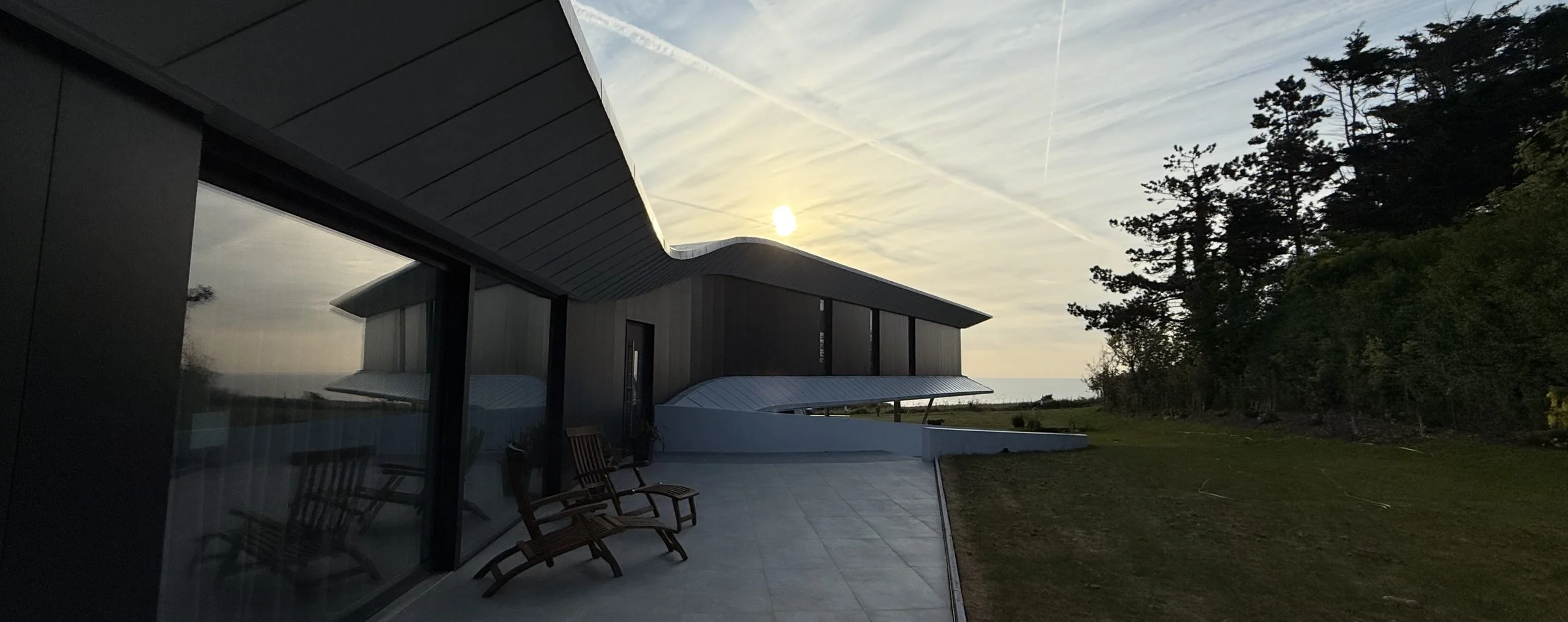
Building a new home in the countryside is often considered by many to be a dream, an aspiration that in reality could never happen. But could it?
Hughes Planning has unrivalled experience in successfully obtaining planning permission for new country houses in different parts of England, including sites within Green Belt, National Landscapes and National Parks.
Para 84 is dead : long live policy ho11
In August 2026, the Labour Government replaced the former National Planning Policy Framework (NPPF), published in December 2024, which contained paragraph 84, sometimes referred to as the Country House Clause. Hughes Planning is delighted to confirm that the country house planning policy that has existed since 1997 providing the justification and policy support for new isolated homes in the countryside remains unaltered.
The former policy, known as ‘Para 84’, has been replaced by Policy HO11: Isolated Homes in the Countryside.
Policy HO11 of the NPPF (August 2026) states that: -
“Development proposals for isolated homes in the countryside should only be supported where the design is of exceptional quality, in that it is truly outstanding, reflecting the highest standards in architecture, and would help to raise standards of design more generally in rural areas; and would significantly enhance its immediate setting, and be sensitive to the defining characteristics of the local area.”
Hughes Planning has (to date) secured planning permission for 30 new homes in the countryside under Policy HO11 and all of its earlier iterations, including under the former Para 139 which has been replaced by Policy DP3(5) which gives “substantial weight” to outstanding or innovative designs which promote high levels of sustainability.
The history of the country house policy
The policy began in 1997 when the then Environment Secretary, John Gummer, introduced into planning policy - Planning Policy Guidance 7: Countryside - the opportunity to secure permission for new country houses to continue the centuries-old tradition of building stately homes in the English countryside. The roots of Para 80 are clearly visible from the origins of "Gummers Law"...
“New house building and other new development in the open countryside, away from established settlements or from areas allocated for development in development plans, should be strictly controlled. The fact that a single house on a particular site would be unobtrusive is not by itself a good argument; it could be repeated too often. Isolated new houses in the countryside require special justification - for example, where they are essential to enable farm or forestry workers to live at or near their place of work. An isolated new house in the countryside may also exceptionally be justified if it is clearly of the highest quality, is truly outstanding in terms of its architecture and landscape design, and would significantly enhance its immediate setting and wider surroundings. Proposals for such development would need to demonstrate that proper account had been taken of the defining characteristics of the local area, including local or regional building traditions and materials. This means that each generation would have the opportunity to add to the tradition of the Country House which has done so much to enhance the English countryside.”
In 2004, the Labour Government initially sought to remove the policy due to it seeming to unduly favour the wealthy elite. However, the policy was retained, albeit in a different form, in the newly published Planning Policy Statement 7: Sustainable Development in Rural Areas (PPS7).
Contrary to the normal policies of restraint for new residential development in the countryside, PPS7 contained an exciting provision (at paragraphs 10 and 11) that allowed new dwellings to be built in the countryside where they were of outstanding quality and design. Those dwellings proposed under the aegis of paragraphs 10 and 11 of PPS7 are commonly known as “PPS7 houses”. The guidance stated that isolated new houses in the countryside would require special justification for planning permission to be granted, whilst at paragraph 11, it went onto say: -
“Very occasionally, the exceptional quality and innovative nature of the design of a proposed, isolated new house may provide this special justification for granting planning permission. Such a design should be truly outstanding and ground-breaking, for example, in its use of materials, methods of construction or its contribution to protecting and enhancing the environment, so helping to raise standards of design more generally in rural areas. The value of such a building will be found in its reflection of the highest standards in contemporary architecture, the significant enhancement of its immediate setting and its sensitivity to the defining characteristics of the local area.”
In March 2012, the Government issued new national planning guidance entitled the National Planning Policy Framework (NPPF) and this replaced PPS7. Significantly, the provision that allowed for the erection of houses of exceptional quality and innovative nature of design in the countryside was retained in the new national planning policy guidance. At paragraph 55 of the NPPF, the guidance advised local planning authorities that they should avoid new isolated homes in the countryside unless there are ‘special circumstances’. One such special circumstance (at bullet point 4) is the exceptional quality or innovative nature of the design of the dwelling: -
“Such a design should:
be truly outstanding or innovative, helping to raise the standards of design more generally in rural areas;
reflect the highest standards in architecture;
significantly enhance its immediate setting; and
be sensitive to the defining characteristics of the local area.”
It is clear from the wording of the paragraph 55 that some of the more difficult terms in paragraph 11 of PPS7 were not carried forward into the NPPF. For example, terms such as ‘very occasionally planning permission will be granted…’ and ‘such a design should be ground-breaking’ no longer appear in the policy wording. In addition, it is significant to note that the design of dwellings can now either be truly outstanding or innovative, but they do not have to be both.
Whilst there is no doubt that the challenges presented by the requirements of paragraph 55 (bullet point 4) of the NPPF set a high bar for proposals, and rightly so, the removal from the policy wording of some of these more difficult terms was welcomed, particularly the terms ‘very occasionally’, which inferred few and far between, and ‘ground-breaking’ which had always proven almost impossible to demonstrate in practice.
Para 55 to 79
In July 2018, the Government published its updated National Planning Policy Framework and this was revised again in February 2019. The policy provision for new houses of exceptional quality of design in the countryside was contained within paragraph 79 of the former national planning policy guidance. The guidance read as follows: -
“Planning policies and decisions should avoid the development of isolated homes in the countryside unless one or more of the following circumstances apply:
e) the design is of exceptional quality, in that it:
- is truly outstanding or innovative, reflecting the highest standards in architecture, and would help to raise standards of design more generally in rural areas; and
- would significantly enhance its immediate setting, and be sensitive to the defining characteristics of the local area.”
Para 80 TO PARA 84
In December 2024, the Labour Government published the last iteration of the NPPF. The former policy provision read as follows: -
“Planning policies and decisions should avoid the development of isolated homes in the countryside unless one or more of the following circumstances apply:
e) the design is of exceptional quality, in that it:
- is truly outstanding, reflecting the highest standards in architecture, and would help to raise standards of design more generally in rural areas; and
- would significantly enhance its immediate setting, and be sensitive to the defining characteristics of the local area.”
DEVELOPMENT APPRAISALS
As part of our successful approach in securing planning permission for new country houses in England, at the very beginning of the journey, and well before any design work is initiated, we undertake a development appraisal to advise our clients as to whether there is a realistic chance of success in obtaining permission on a particular site for a new dwelling in the countryside, taking account of the provisions within the NPPF and the localised policies of the relevant development plan.
architectural collaborators
The practice has worked on houses of outstanding quality of design in recent years in close collaboration with Anderson + Prescott based in Newbury, AR Design Studio based in Winchester, CaSA Architects based in Bath, FOSTER LOMAS based in London, HAWKES Architecture based in Kent, Hollaway Architects with offices in London and Kent, Lyon & Co based in Penarth, McLean Quinlan with offices in London and Winchester, PAD STUDIO based in Lymington, Seymour Smith Architects based in the Cotswolds, and Shaw & Jagger Architects based in Harrogate.


